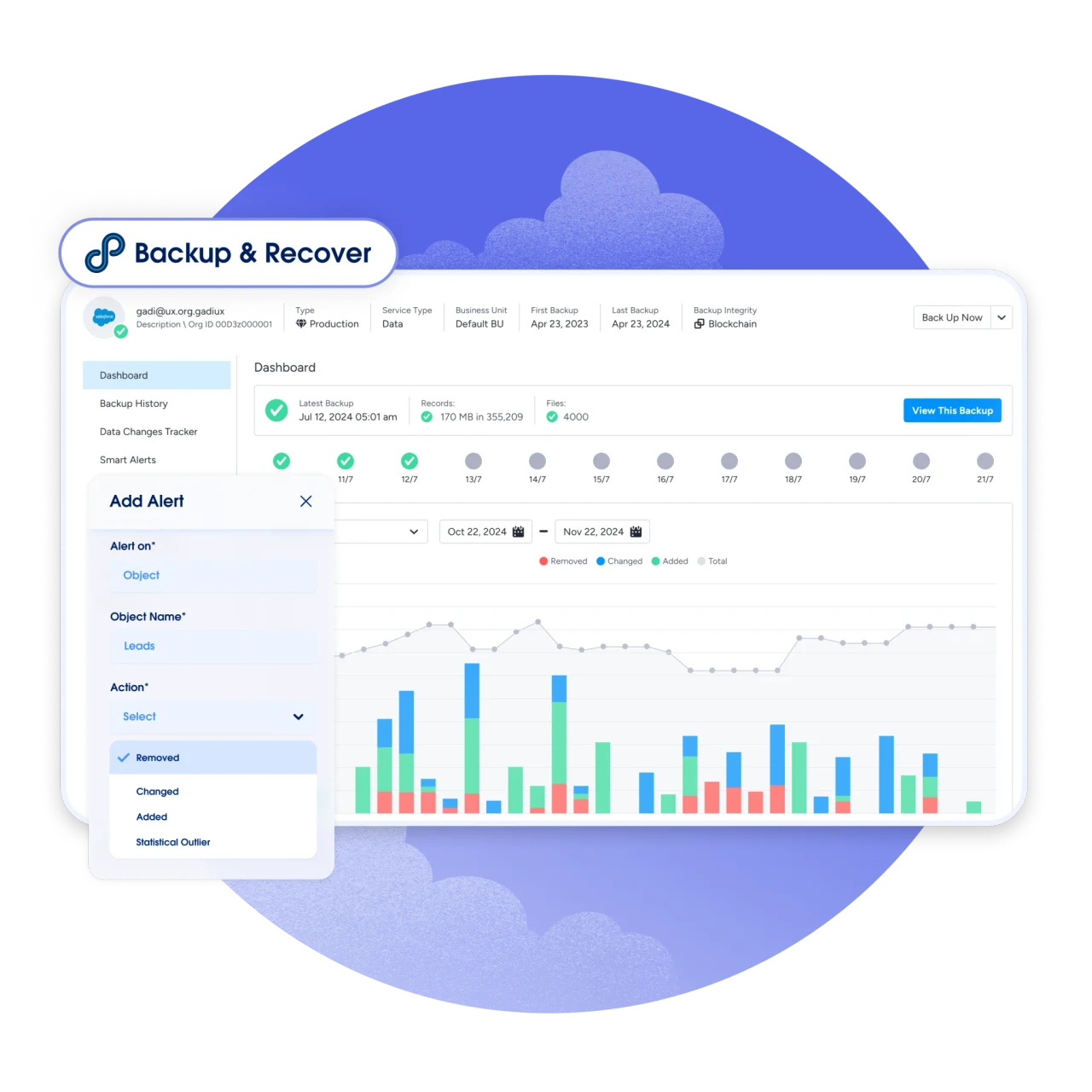
This is more than a product expansion. It reflects something important about how the platform is evolving.
For years, many organizations assumed their Salesforce data was fully protected simply because it lived inside Salesforce. Others relied on manual exports or basic tools without a clear recovery strategy.
The reality is different.
Salesforce secures the infrastructure. But protecting and restoring your data has always been your responsibility.
Why Data Loss Is More Common Than You Think
When we talk about data loss, most executives think about cyberattacks.
In practice, that is rarely the main cause.
The most common scenarios are:
• Accidental record deletions
• Incorrect data imports
• Broken integrations
• Automation errors
• Metadata changes that affect reporting or workflows
When Salesforce drives your revenue operations, even a small data issue can impact forecasting, reporting accuracy, and client relationships.
And restoring data without a proper backup strategy can be slow, incomplete, and expensive.
What the Acquisition of Own Signals
By acquiring Own, Salesforce is bringing backup and recovery closer to the core of its ecosystem.
That matters for one simple reason:
Data protection is no longer optional. It is part of responsible CRM governance.
Backup is not just an IT decision. It is a business continuity decision.
If Salesforce supports your sales pipeline, customer service, renewals, or operational reporting, your data is one of your most valuable business assets.
What Companies Should Be Asking
Instead of assuming everything is safe, leadership teams should be asking:
Do we have automated backups in place?
Can we restore both data and metadata?
How long would recovery take if something significant were deleted today?
Have we tested our recovery process?
If the answer to any of these is unclear, there is exposure.
How We Approach Backup at Palm Consulting
At Palm Consulting, we treat backup as part of overall Salesforce governance.
We help clients:
• Assess their current exposure
• Implement a structured backup solution
• Validate recovery processes
• Ensure both data and metadata are protected
In most cases, we can have a backup strategy implemented and validated in less than one week.
The goal is simple. Confidence.
You should be able to focus on growing your business without worrying about whether a mistake or system issue could disrupt operations.
Final Thoughts
Salesforce acquiring Own is a clear reminder that data protection is a strategic priority.
If Salesforce runs a critical part of your business, backup should not be an afterthought.
If you would like to review how protected your Salesforce environment really is, let’s talk.
Protecting your data today is far easier than trying to recover it tomorrow.